Supposedly, There’s a Toucan Here
Inspiration can come from the least likely places. A person, an image, a landscape, a song, even a smell at a particular moment can settle in someone’s mind and grow with them, quietly nudging them down one path or another.
The truth is that people who are inspired are often unaware of where that inspiration came from. It may have been a moment so unguarded that it slipped by almost unnoticed. And yet that single instant can mark a before and an after. I like to think that something like that happened in Mindo in October 2023.
Elias and I visited Birdwatchers House in October of 2023. By the time the story that I’m about to tell you unfolded, we had already spent around twelve hours waiting for a plate-billed mountain toucan to land on a feeder. For those who have not travelled before with a photographer, the wait was not only for the Toucan to land merely near the feeder, of course, but on the exact spot where the light, the background and the bird might briefly come together for the image Elias had imagined.
Although the toucan was a frequent visitor, and we are patient people, this bird did, as wildlife often does, decide to follow no schedule at all.
I don’t take photographs myself, at least not professional ones. I work in conservation, and I am convinced that conservation matters for the future: for my future, for yours and for the future of the children we unexpectedly met that afternoon.
They arrived while we were waiting, around seventeen of them. An excited class visiting Mindo with the Unidad Educativa San Francisco de Quito, or UESFQ. Vinicio, the owner of the location, had arranged the visit with the school, and on that day the group found Elias and me already there.
Elias was the photographer. I was the conservationist who suddenly found herself trying to hold those kids’ attention. And all of us were waiting for a toucan.
While We Wait
There is a considerable difference between a 28-year-old deciding to wait hours on end for a toucan and asking a group of children to do the same. Expecting around seventeen children to stay still for multiple hours, waiting for a bird they knew very little about, without understanding why waiting for it mattered or what it meant, was an ambitious plan that was not necessarily considered by Vinicio or the teachers who accompanied the group.
I understood their restlessness. I felt it too, and I was supposed to be the patient one. I felt responsible for helping them understand why this waiting might be worthwhile.
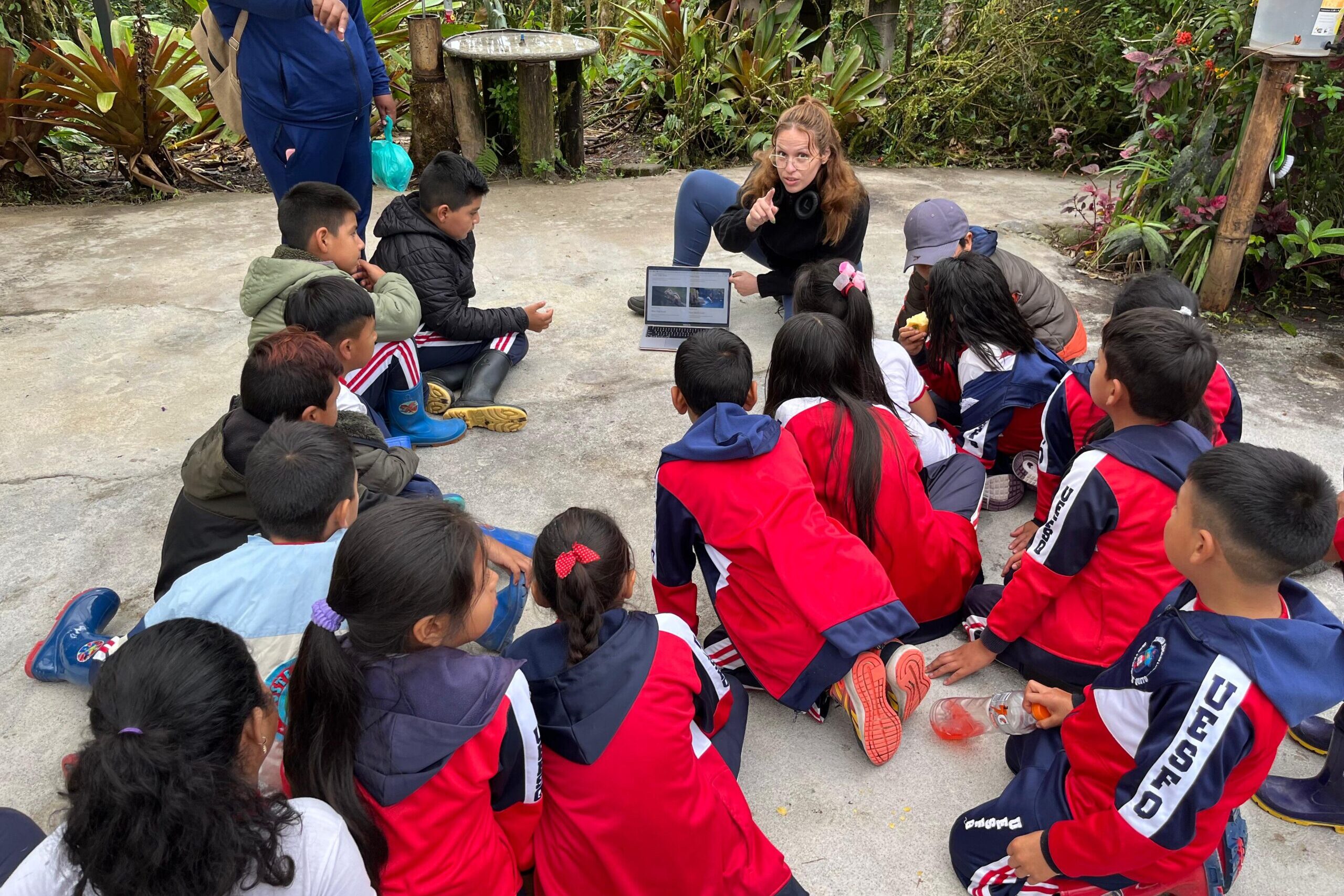
Elias had been building his online portfolio for a few years. So when the kids started to ask questions about why the very gringo-looking man was carrying such a big camera, I began showing the children some of the animals he had photographed elsewhere in the world: a puffin, a tiger and some of Africa’s iconic wildlife.
For a little while, no one was asking when the toucan would arrive.
Showing the children some photos while waiting.
Having the group listen to me so closely turned out to be unexpectedly significant. Nobody was asking why I was showing them these animals. They simply wanted to know more. They were listening, and listening closely.
I asked them in Spanish, “¿Saben cómo se llama este caballo con rayas?” (Do you know what this horse with stripes is called?)
Some shook their heads. Then one child answered, quietly and a little nervously: “¿Es esa una cebra?” (Is that a zebra?)
“Así es.” (That is correct.)
The child remembered.
It was only the name of an animal that not even I had seen in real life, but it made me wonder: could one of them eventually become part of the future of conservation? And even if that question reached too far, could one of them go home and repeat something they had heard? Could one photograph shown here, far from their homes in Nanegalito, a rural parish outside of Quito, become a conversation at someone’s dinner table?
I still don’t know.
But that afternoon made me think more deliberately about what inspiration looks like before it’s recognised as such.
Substitute Teacher
At some point during the afternoon, one of the children asked the question everyone was thinking:
“What are we waiting for?”
The answer was the toucan, of course. But it is funny how a question that simple can stay with you. I have caught myself asking it in very different places and rooms since that day.
My working life does not look much like a cloud forest. I spend much of my time reading and reviewing documents: standards, legal analyses and the rules being developed for markets intended to reward people for stewarding nature.
In that world, nature frequently arrives in the form of policies, metrics and politics. I believe in those tools. If I didn’t, I would not have spent so much of my professional career working with them. Rules, money and measurement all help turn good intentions into something you can actually explain to someone who doesn’t speak conservation.
But they also introduce a different kind of waiting. Governments, banks and businesses make commitments to nature all the time. Much of my professional curiosity concerns what happens next: how a pledge on paper becomes something measurable on the ground, and why that transformation so often takes longer than anyone promised.
What are we waiting for?
Sometimes the honest answer is a regulation, a bureaucratic process, a verification report or a budget line. Sometimes it is simply that not enough people are asking.
That afternoon in Mindo, however, nobody needed a hectare, a baseline or an indicator. They were gathered around a laptop and needed something much simpler: something worth looking at and someone willing to explain why it mattered.
Here is something I did not expect to learn from a toucan. Without anyone planning it, those children were being asked to do one of the hardest things conservation asks of all of us: to wait for something we cannot control on a schedule that is not ours, for a reason we may not yet fully understand.
The bird comes when the bird comes.
And a forest protected today may not look visibly different tomorrow. A restored river can take years to demonstrate that the work was worthwhile. Many of the people who make conservation decisions will never know whether those decisions ultimately produced the result they intended. That is part of what makes conservation difficult to sell to a ministry, an investor or a ten-year-old. The reward may be real, but it arrives late, and rarely on cue.
What changed the mood in Mindo was not a lecture about patience. It was giving the waiting a story. Once the children knew what the toucan was, what other strange and extraordinary creatures shared the planet with it and why those animals were worth protecting, the waiting was no longer empty time. It had become anticipation.
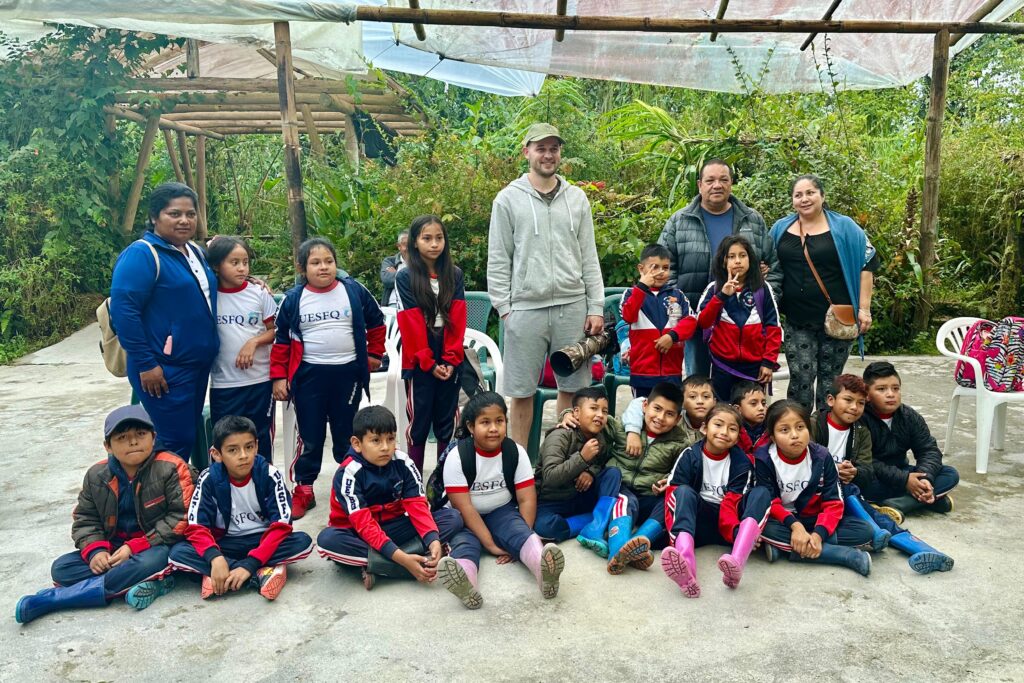
UESFQ group at Birdwatchers House, Mindo, October 2023.
There was also an irony I only noticed later.
I had been showing Ecuadorian kids animals from the other side of the planet, while we sat in a forest that people travel across the world to experience. How many children grow up able to name a lion long before they can name the birds outside their own window?
I do not say that as a criticism of the children or their school. The wildlife images that reach us most easily often come from far away. But the experience made me think that part of the job, for people like Elias and me, is to point the camera, and the conversation, back home.
The Power of a Moment
I want to be honest about what photography can accomplish.
I don’t think a photograph, on its own, protects anything. A picture of a toucan does not stop a road, fund a park ranger or change a land-use plan. I have read enough documents during my career to be suspicious of anyone who claims that a single image can save a species.
But I have also seen what an image can do that my documents cannot. A photograph travels. The children could not take the cloud forest home with them. They could not take the toucan, the zebra or the big cats. But they could take an image. They could show it at the dinner table, to a younger brother or to a grandmother who has never visited Mindo.
A photograph can turn “you had to be there” into “look at this”. And “look at this” is often where caring begins.
Watching Elias work that day also demonstrated something that is easily overlooked. People often think wildlife photography is about the fraction of a second in which the shutter clicks.
It isn’t.
It is also about everything that happens before that fraction of a second: researching the animal and its habitat, finding a responsible and ethical way to encounter it, reading the light and knowing where to stand while respecting the animal enough not to chase it. Sometimes it means travelling halfway across a country, leaving the familiar routes behind and asking local people whether they are willing to share access to land where the animal you’re searching for might be part of their everyday life and sometimes is understanding and accepting – with a heavy heart and plenty of frustration – that it might not come at all.
Good wildlife photography is, in its own way, a practice in many of the things conservation requires: patience, attention, humility and respect for something that owes us nothing.
All of that comes with responsibility, however. Images can mislead as easily as they can inspire. A perfect photograph of a bird on a branch tells us nothing about the road being planned two valleys away. It tells us nothing about the families caring for that forest who may never appear in the frame. It doesn’t tell you about Vinicio, and what the responsibility of maintaining a pristine forest is. It doesn’t even tell us if the bird was comfortable in front of the lens.
A beautiful picture without context can make us complacent. If a place looks pristine and the subject looks at ease, we may assume that it must be fine.
That is why I do not believe the photograph is the end of the story. It is the invitation. The context is what keeps you there after you have accepted it.
I may never know whether that afternoon affected any of the children in Mindo. But I have seen something similar happen closer to home.
My nephew Benjamin was seven years old when he woke up at 7 a.m. on a Sunday in that same year of 2023, to travel two hours from Quito into the Andean mountains. The purpose of the journey was to find a sword-billed hummingbird.
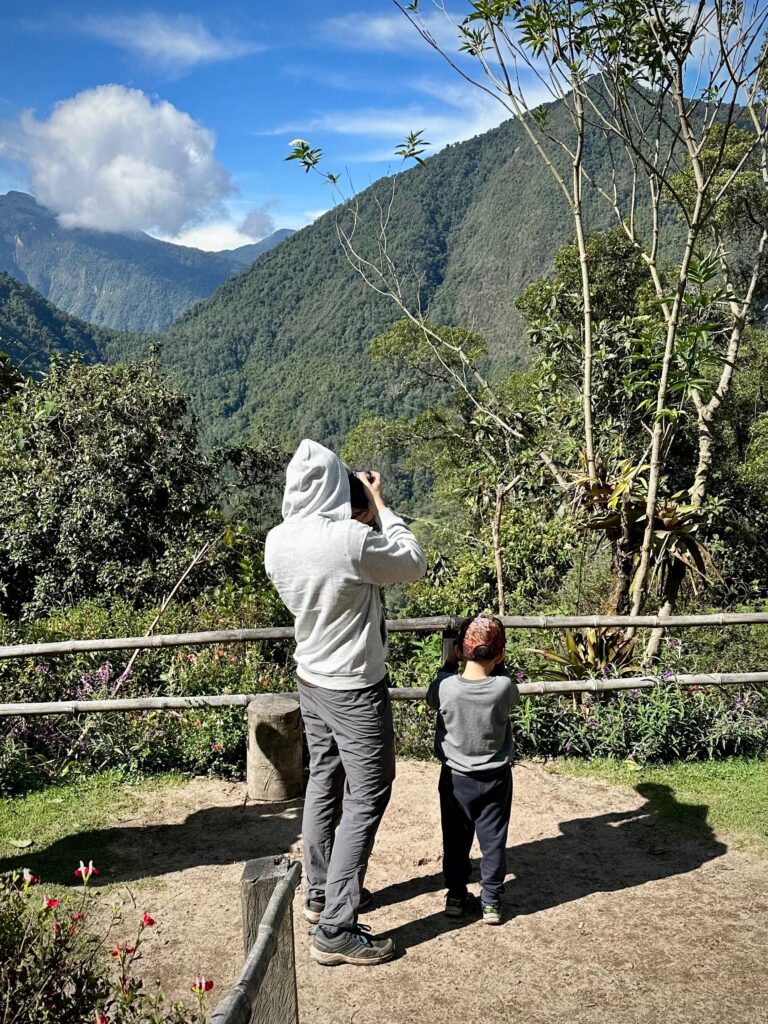
Elias and Benjamín at the Zuroloma reserve near Quito, Ecuador.
That morning gave Benjamin the opportunity to experience nature directly: to see the bird with his own eyes and to begin understanding why the landscapes and wildlife around him form part of a shared history.
Benjamin was asked to wait too, just like those children in Mindo had been. And despite being a remarkably patient seven-year-old, eventually the hours began to test him. But the bird came. At the very end of the morning, the sword-billed hummingbird appeared, and Benjamin’s excitement was impossible to contain.
The experience belonged to him. Nobody could manufacture the reaction for him or guarantee that it would leave a lasting mark. All we could do was create the opportunity. He was learning firsthand what he had only seen in his natural science textbooks – or at least the toddler versions of those-, and that moment sparked his curiosity further. Three years later, he still remembers it, and he told me how the story continued afterwards:
Listening to him, what moved me most wasn’t just that he remembered the bird, but that he chose to share it. The story traveled on. For a few of his classmates, he may have sparked the very kind of inspiration this piece began with.
I’m unsure and quite honestly doubtful whether photography can move an entire generation, but I have watched wildlife images hold the attention of seventeen children for an afternoon. I have seen one child wake up unreasonably early on a Sunday because there was a hummingbird somewhere in the mountains that he wanted to find.
Perhaps that is how a generation starts moving: one child, one image and one question asked out loud.
The Toucan, Finally
And back in Mindo, the toucan eventually came.
After all those hours, the bird landed exactly where it always landed, as if nothing unusual were happening. Elias managed to capture the images for which we had been waiting.
The children, however, did not see it. By the time the toucan arrived, they had gone.
That might sound like an unsuccessful ending at first. They had waited, and the anticipated reward had not arrived in time. Still, I keep thinking about Benjamin telling his classmates about a bird none of them had ever heard of, and his teacher pulling up a picture for the whole class to see. Sometimes, what truly matters isn’t spotting the bird itself, but what we carry home and share with others. Perhaps seeing the toucan was never the only point.
The children had spent an afternoon in the cloud forest. They had gathered around photographs of animals they had never encountered. One child had remembered the name of the striped horse. They had asked questions, listened and gone home knowing a little more about wildlife than they did when they arrived.
I hope they also went home feeling more connected to the place in which they live; not only the cloud forest, but this world.
The toucan came. Just not on their schedule.
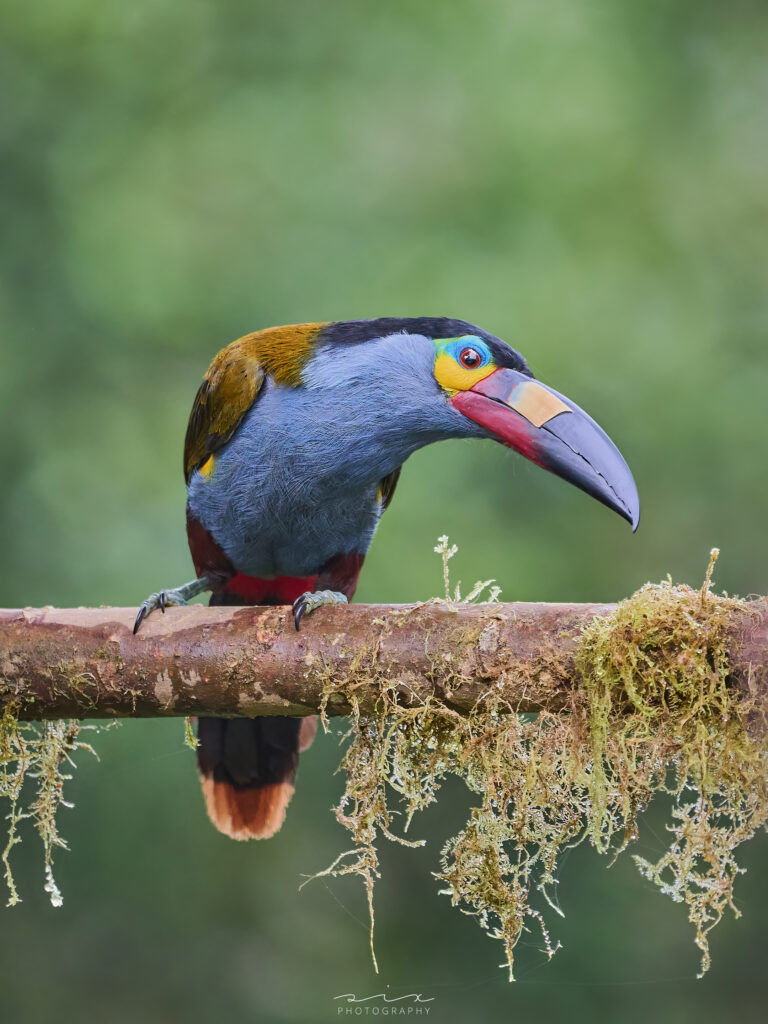
Plate-billed Mountain Toucan in Mindo (Ecuador) 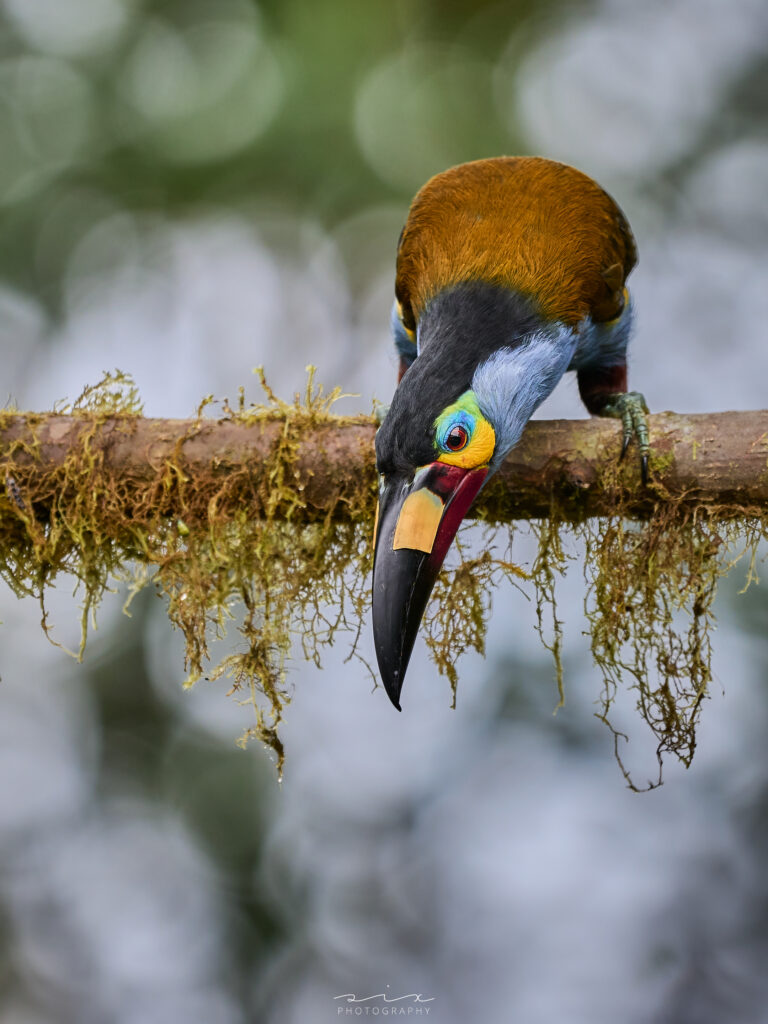
Plate-billed Mountain Toucan in Mindo (Ecuador) 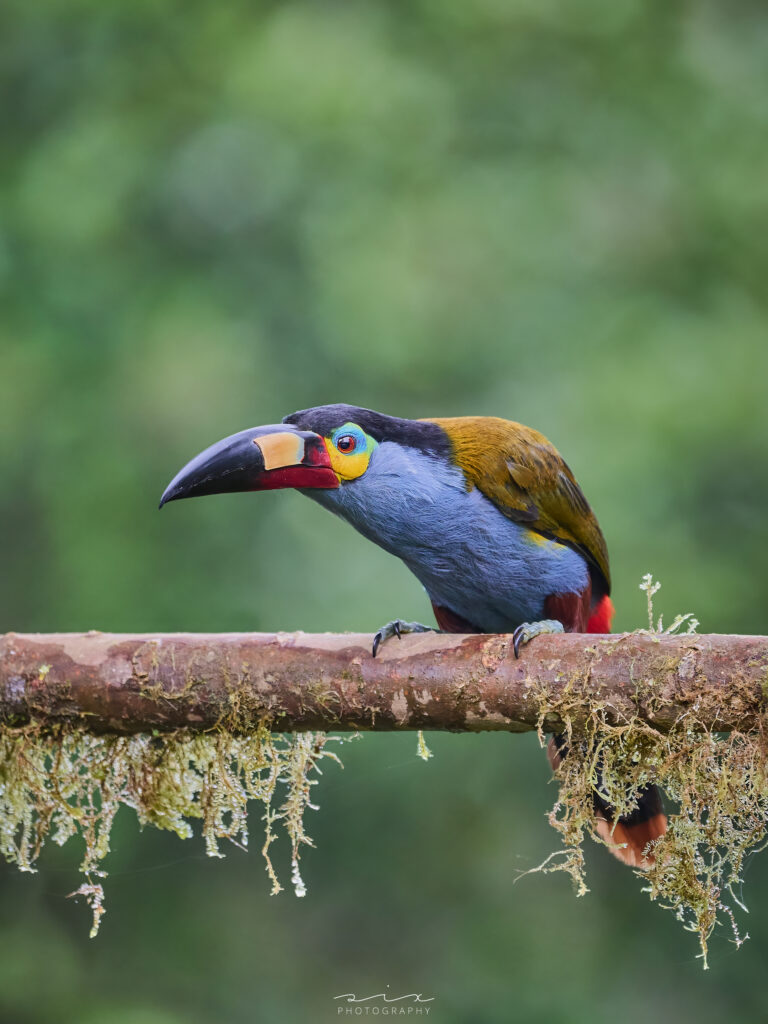
Plate-billed Mountain Toucan in Mindo (Ecuador)
What Are We Waiting For?
That afternoon has become part of my purpose in Wildview. I want to contribute context beyond the photograph: the consequences beyond the moment and the reason an encounter matters after it has ended.
In the financial conservation world, we sometimes talk about ‘additionality’: the difference an intervention makes beyond what would otherwise have happened. Here, I mean something more personal. I mean the “why this matters” that turns a beautiful image into something you carry home.
I have spent years working on the technical side of conservation. I still believe deeply in that work. Conservation needs standards, legal frameworks, finance, monitoring and accountability.
But the technical side only functions if enough people care in the first place. This journal is my small attempt to contribute to the caring part.
Maybe one of those seventeen children will eventually work in conservation in Ecuador. Maybe one of them went home that evening and told their family about big cats in Africa, and learned about puffins and their coloured beaks. Maybe none of them remembers the afternoon at all. I will probably never know, and I have made my peace with that.
Conservation is full of results we never get to see.
So the next time you find yourself waiting, for a bird, for change or for someone else to act, I invite you to borrow the children’s question, as I have done:
“What are we waiting for?”